In May of 2025, the Town of Basalt held a series of contested public hearings on a potential $2,532 per bedroom per year fee for short term rental (STR) operations in order to generate revenue for affordable housing. The fee was approved by a vote of 4-3, but not without hours of debate between councilors and dozens of citizens coming to the podium to voice their support for or concerns with the new measure. Town staff were directed to hold off on charging the fee until the new year began. For at least one household, the new fee has stretched their finances too far.
From Berlin to New York, housing studies have found correlations between STRs and decreased housing availability and increased rents. It intuitively makes sense — one bedroom held for tourists is one less bedroom available for the local workforce, and in the Roaring Fork Valley, tourism can be highly lucrative. However, due to those very housing costs, income from STRs is the only thing keeping some locals afloat.
Michael Schoepe and his husband, Paul Dankers, have been a part of the Roaring Fork Valley’s community for many years, closely involved with the Aspen Choral Society, VOICES, Challenge Aspen and other organizations as a pair and individually. In 2024, the two became music co-directors at the Two Rivers Unitarian Universalist congregation. For years they have worked long hours to make ends meet, while offering rooms in their home for both an STR and long-term rentals.
Schoepe was one of multiple Basaltians who came to the podium during last May’s public hearing to voice concerns about the proposed STR fee. Schoepe, like others, communicated to Town Council that his STR operation made life in Basalt possible, and that a new fee on top of the current cost of living would be the proverbial “straw that breaks the camel’s back.” That prediction has become reality, and Schoepe and Dankers have made the difficult decision to sell their home and leave Basalt indefinitely.
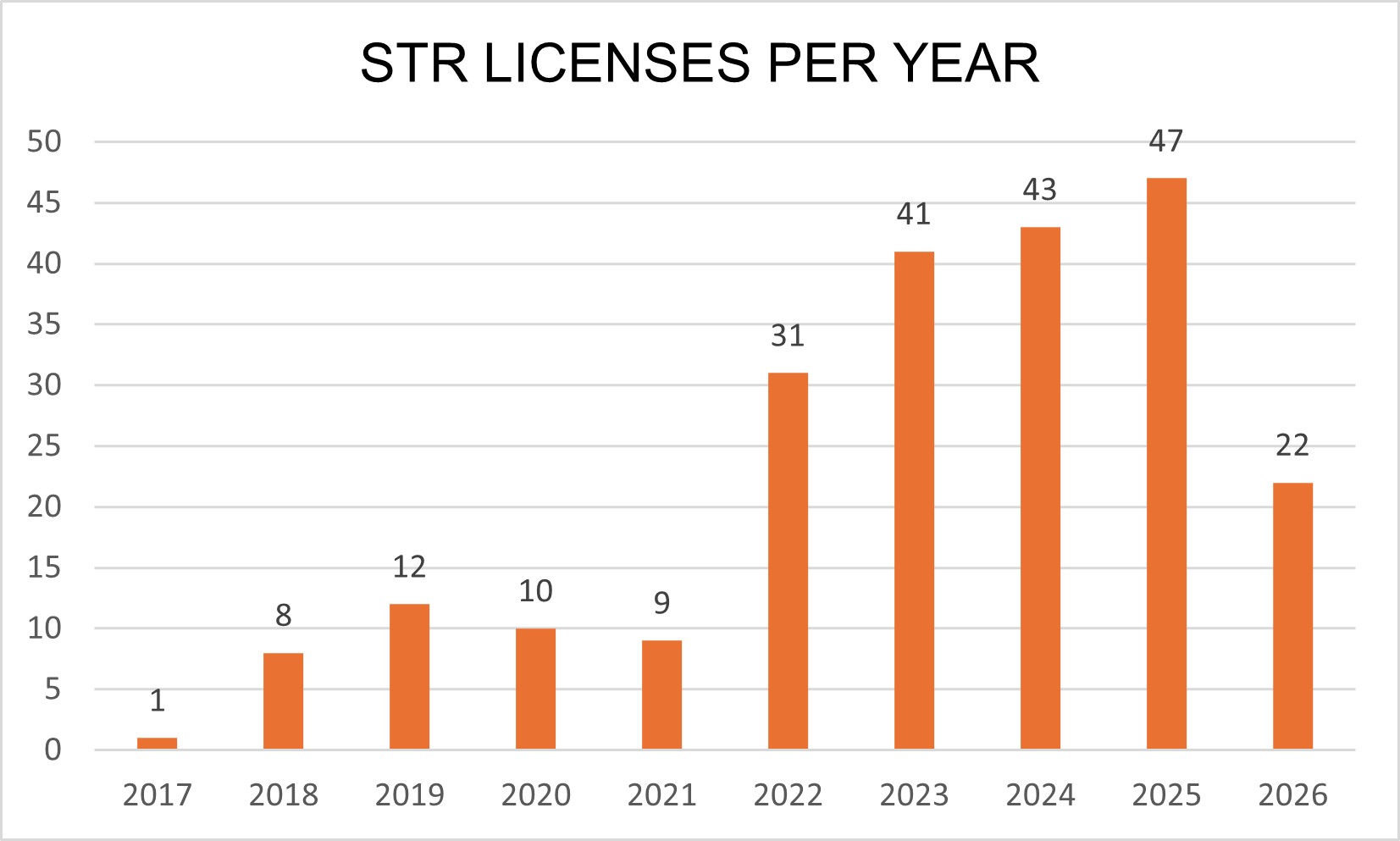
Basalt’s first STR license was issued in 2017. In the four years before and during the COVID-19 pandemic, Basalt issued an average of 9.75 STR licenses per year. In 2022, the number of licenses tripled to 31. The quantity steadily increased in subsequent years, peaking in 2025 at 47 licenses.
In response, Town Council attempted to address affordable housing needs via a flat per bedroom per year fee for STRs. Town Staff and Council landed on a $2,532 rate based on a study by Economic and Planning Systems (EPS) which stated that this value was half of the maximum amount that could be charged. EPS calculated this total value measuring the gap between the housing local employees can afford and the average cost of housing in Basalt.
As of Feb. 9 of this year, only 22 licenses have been issued, 20 of which are renewals. While data is unavailable for how many bedrooms are being rented per license, a majority of Airbnbs listed online in Basalt are only one bedroom. At a minimum, Basalt has generated $55,704 from the new fee thus far. Notably, Schoepe did not pay the license fee and instead plans to stop operating his Airbnb after using the 60-day primary residence exemption.
In 2025, before the fee was active and when the quantity of licenses was twice as high, the Town would have hypothetically generated at least $119,004. Some concerned citizens were quick to opine at hearings that this did not appear to be a significant amount of revenue considering the median home price of a single-family residence in Basalt was over $1.8 million in 2024 according to a separate housing needs assessment by EPS. In addition, multiple STR-operating citizens stated that the fee would discourage them from operating in the new year, implying less revenue would be generated by this fee.
Other mountain communities have employed other methods of using STRs to produce revenue. The Town of Carbondale imposes a 6% tax of the gross rental price paid by customers, a 2% lodging tax and a variable license fee depending on the number of bedrooms and whether the property is owner occupied. The maximum licensing fee in Carbondale, which would be for a four-bedroom property that’s not owner-occupied, is $875 (less than a third of Basalt’s standard per-bedroom fee). The minimum is $100.
Schoepe explained in an interview that it’s not always as simple as increasing the rental rate to factor in the new fee. For his modestly-sized operation, prices need to be comparatively low to remain competitive on the local market. Other STR operators in hearings argued that a flat per-bedroom rate disproportionately affected more affordable operations.
Schoepe also emphasized that when he and his husband sell their home, they can’t determine whether the buyer will be a full-time Basalt resident or whether they’d use part of the property for a rental, short or long-term — the latter of which the pair had offered to members of the local workforce.
While Schoepe and Dankers will continue to contribute to the Roaring Fork Valley’s musical community through the summer after finding temporary residence downvalley, they are preparing to begin a new chapter of their lives after a measure meant to promote affordable housing inadvertently made their own housing unaffordable.
What do you think of Basalt's $2,532 per bedroom per year fee for short term rentals?

Apparently, everyone looking for love is tired of the apps, because the No Swipe Social interactive dating game, hosted at the Crystal Theatre on Feb. 12, completely sold out. Fresh suitors and contestants rotated for four rounds, culminating in a winning pair at the end of the night. From fun lines of questioning to riotous games — such as a not-my-arms challenge where one partner raced to peel an orange and stuff it in the other’s mouth — made for a lot of laughs and wholesome connections. And not only has the winning duo been on a date since, according to organizer and emcee Aubree Schiesser, but as have several others who attended, including herself. “I don’t know about love right now. It was just last week,” Schiesser told The Sun. “But there are definite interests brewing.”
Tune into Everything Under The Sun on KDNK this Thursday, Feb. 19 at 4pm to hear more about how it went. And stay tuned for the next one by following @no.swipe.social on Instagram
What kind of programming do you want to see the Crystal Theatre Alliance nonprofit tackle?

In mid-January, The Sopris Sun received an anonymous tip from a resident at the Crystal Meadows retirement community describing that a neighbor’s truck had been broken into. Several days later, a Carbondale Police press release detailed multiple break-ins of vehicles and residences at River Valley Ranch. This followed another press release from mid-December about the arrest of an individual who had burglarized a home with the owner present earlier that month.
These reports have led many to wonder if crime is on the rise in our little town – especially since many old-timers remember never locking doors and leaving keys in vehicles. The Sun recently sat down with Carbondale Police Chief Kirk Wilson to get his perspective.
Wilson, who took over as chief from Gene Schilling in November 2020, told The Sun, “Overall, crime is stable; it’s not increasing rapidly, it’s not decreasing.” With the growing number of people in town, “We’re seeing more and more quality-of-life type of calls for service,” such as parking (“a huge issue”) and altercations with pets, “as opposed to big crimes.” The town does not “get many violent confrontations, though when we do, they get a lot of media attention.”
Traffic is another “big issue,” especially the greater number of vehicles on Hwy 133. “When 133 gets plugged up … people use 8th, Hendrick or Snowmass as bypass routes,” with more calls from residents on those streets.
When asked about an apparent significant increase in drivers ignoring stop signs, Wilson agreed, acknowledging that rolling the signs is “becoming commonplace” these days. Noting that Carbondale has an aging population and enjoys its reputation as a “walkable town,” he said that officers try to address this and other situations (e.g., dogs off leash or pedestrian-bicycle encounters) as safety issues. “Our job overall is to seek compliance with the people’s, behavior.” His philosophy: “Interact with our public, educate the public, enforce the law.” In that order.
Wilson emphasized that the police try to “tailor the way that we enforce, the way that we communicate with people, to a way that this community really wants us to … to keep safety at the forefront of everyone’s mind.” He did acknowledge, though, that “proactive enforcement has fallen behind” since losing the force’s municipal officer last summer.
When asked if there had been any changes in criminal activity at big town events like Mountain Fair or Dandelion Day, Wilson indicated that the department had not seen any. He did mention, without going into detail, that his goal is for an “increase in actual public safety, with no one even noticing it’s taking place.”
Wilson was particularly concerned about vehicle-pedestrian altercations, given how many outside events take place in Carbondale, citing the deadly incident in New Orleans on New Year’s Day 2025. He said, “We have to plan for how to mitigate these things,” adding that they are working to “minimize the obvious low-hanging-fruit risks” by using planter barricades and other measures.
Finally, the chief was asked about any actual or potential activity by Immigration and Customs Enforcement or Customs and Border Patrol agents in the area, especially given our large Latino population. He said he knew of only one arrest, on Rte. 82 near Carbondale. Although he was not at liberty to explain further, he mentioned ongoing discussions within the department and with others regarding the perception of the police if federal agents carry out operations here. He strongly emphasized, “We’re not enforcing [federal] immigration law, period.” In fact, he mentioned efforts to help staff and family members obtain U.S. citizenship. He wanted people to be clear about the distinctions between local, state and federal jurisdictional responsibilities.
One last issue that Wilson wanted to touch on was the strong esprit de corps in the department. Personnel may leave to go elsewhere, but they often come back. “It says a lot about our community, it says a lot about our particular organization … and also a little bit about our leadership – not me.” He noted efforts with Lieut. Bill Kirkland to “make sure our officers here know that they are family, that they’re supported, that their personal lives matter to us.” He described programs to “make our officers feel and know that the department and the town [are] interested in their well-being. … Because it benefits everyone.”
Have you personally noticed a rise in crime in Carbondale?
The candidates to appear on Carbondale's upcoming municipal elections ballot have been announced. What would you like to ask these candidates? Community-sourced questions will be incorporated into our coverage and a live forum hosted at Town Hall (date tbd).
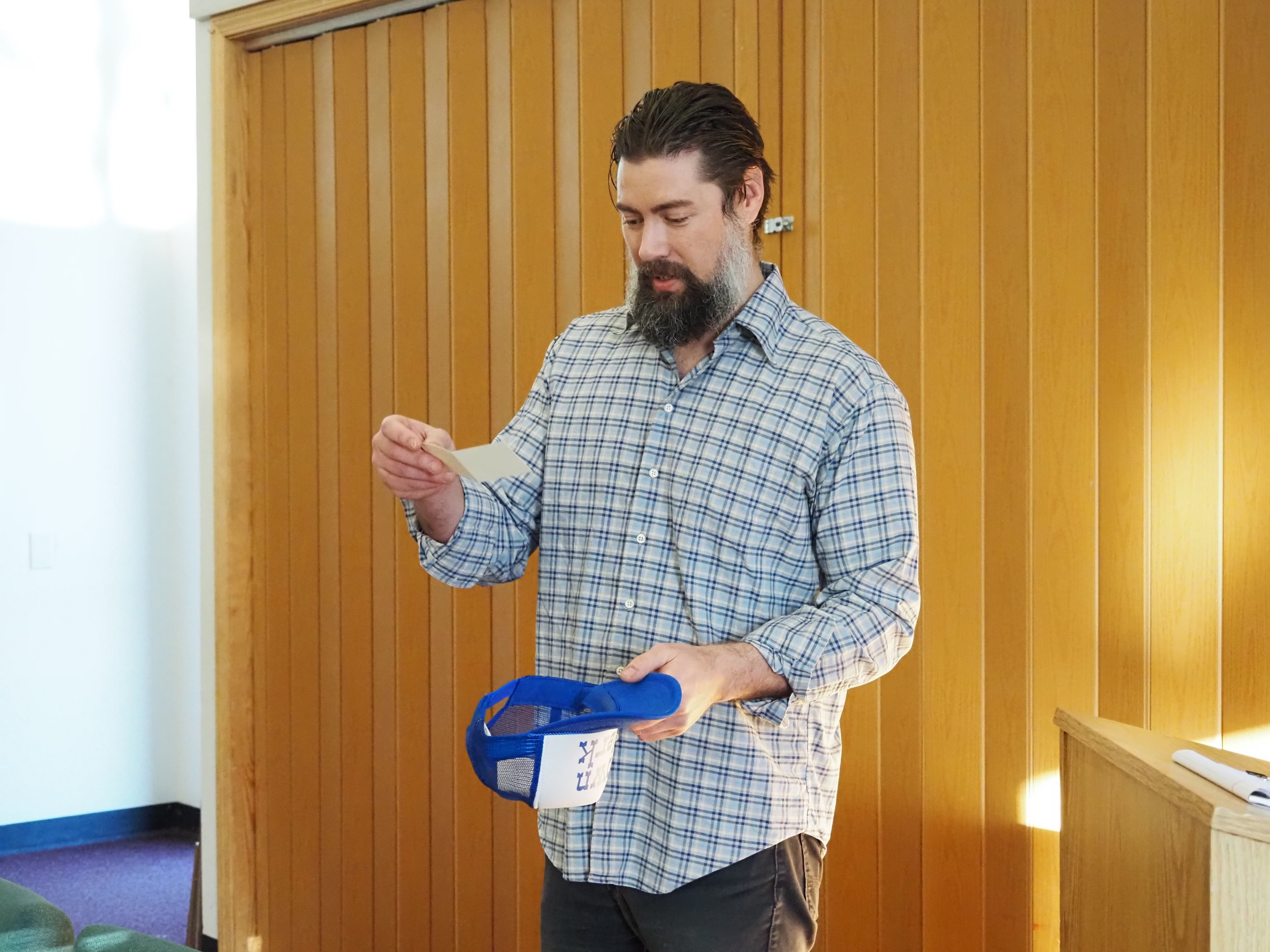
Carbondale Clerk Patrick Thibault drew the order of names to appear on the municipal elections ballot from his “Town Clerk” trucker hat on Feb. 4. On April 7, Carbondale will elect a new mayor as well as three trustees.
The candidates (in the order he drew them) for mayor are Erica Sparhawk and Patricia Savoy; running for three trustee seats are Joanne Teeple, Kade Gianinetti, Colin Laird and Chris Hassig.
What would you like to ask Carbondale's mayor and trustee candidates?
By Annalise Grueter Sopris Sun Contributor
As Roaring Fork Valley residents navigate this winter’s low precipitation, leaders at the Aspen Center for Environmental Studies (ACES) are warning that shifting average temperatures are also a significant concern. At the beginning of the month, Forest and Climate Director Adam McCurdy noted the asymmetric warming trend in ACES’ monthly “Wild Tracks” newsletter.
Asymmetric warming is a pattern observed by scientists in which average nighttime temperatures and average daytime temperatures change at different rates. In the early 1990s, a coalition of meteorological scientists analyzed data from over 2,000 weather stations around the world for patterns between 1951 and 1990. While the most significant finding was that average temperatures had increased over those four decades, they noted that maximum temperatures (or daytime highs) had risen by an average of 0.5 degrees Fahrenheit during that time. Minimum temperatures (nighttime lows) had warmed nearly three times as much for an average of 1.4 degrees.
Additional research has confirmed those patterns. In 2018, another study was published. It analyzed data between 1901 and 2014, concluding that the difference between daytime and nighttime temperatures (diurnal temperature range) has decreased over that time period as nighttime low temperatures rise quicker. The data pattern was more clear in certain regions, including North America. In the Fourth U.S. National Climate Assessment, also released in 2018, average minimum and maximum temperatures in the nation were observed at 1.4 degrees and 1.1 degrees warmer, respectively, compared to data between 1900 and 1950.
McCurdy’s warning for the Roaring Fork Valley is a stark one. For the winter season thus far, he said that the region’s nighttime temperatures have been 8.8 degrees warmer than the long-term average. For an area where typical winter overnight lows had been in the single digits to low teens, a nearly nine degrees swing is abnormal. However, it does follow a trend local scientists had already observed. Six years ago, Aspen Journalism published a report showing that Pitkin County’s average nighttime winter lows had increased by about 3.5 degrees from 1950 to 2017 (from below 12 degrees to over 15 degrees).
This winter, that shift influenced Aspen SkiCo’s ability to make snow on the resort mountains. Nighttime temperatures did not drop low enough for man-made snow to last until weeks later than normal. Natural snow that has fallen this winter has been a challenge to preserve between increased overnight and daytime temperatures, particularly at lower elevations.
Snowmaking is a relatively new part of the ski industry. Aspen SkiCo started making snow following the winter of 1976-77, and originally based production on filling gaps during drier winters. But the early-season production and supplementation has become standard, both for special events such as the X Games and to open in time for Thanksgiving.
Despite last week’s storm, the area remains largely in extreme or exceptional drought. As of Jan. 20, snow-water equivalent data from across Colorado shows the state’s snowpack has dropped below the measured historical minimum, dating back to 1987. As of Jan. 22, the Roaring Fork Conservancy reported that the Roaring Fork Watershed’s snowpack is at 56% of normal. Some of the lowest relative measurements are from higher elevation SNOTEL sites.
While precipitation has been low for the first four weeks of 2026, following 2025’s year-long drought, some of the low snowpack can be attributed to increased daytime and overnight temperatures. For Basalt, average January highs have historically been around 33 degrees, with nighttime lows of 4 degrees, according to U.S Climate Data. For much of the first half of the month, Basalt’s daytime highs were in the high 40s, or even low 50s, while overnight lows did not drop below 20 degrees. That trend was true for the entire Valley, though specific temperatures varied by a few degrees.
Increased nighttime cloud coverage and geography-related temperature inversions can be contributing factors to the overnight lows warming faster. Overcast nights trap heat, which prevents deep cooling that helps preserve snowpack during sunny or warmer days. Mountain valleys can also experience temperature inversions even without nighttime cloud cover. When this occurs, typically during high-pressure systems, dense cold air sinks to lower elevations, while high elevations experience warmer temperatures. This can be exacerbated by air pollution. Particulates in the air can behave similarly to clouds and trap heat, especially overnight.
Colorado State University’s Colorado Climate Center tracks temperature and other climate data throughout Colorado. The school’s data shows that statewide average temperatures increased by 2.3 degrees from 1980 to 2022.
What changes to local ecosystems and recreation should we anticipate if warming trends continue and how should we prepare?

Have you fallen into the speed trap during a recent run to Glenwood Springs, perhaps after beating the light at Buffalo Valley and coming around the bend hastily approaching South Glen Avenue? Well, you’re definitely not alone. To curb incessant speeding, the City has placed one of its fancy new speed cameras nearby to catch motorists and send them a ticket in the mail.
Five automated vehicle identification system cameras were installed around the city, and after a public information and warning period priming locals, from Oct. 20 through Nov. 21, 2025, roughly 19,400 tickets have been sent out since. The deterrent strategy seems to be working, as data reflects that people are adjusting and slowing down (the primary goal). The speed cameras are being used in other parts of the state, following 2023 legislation that informed the provision in Colorado Revised Statute 42-4-110.5.
Even during that warning period, a couple hundred notices, sans fines, were sent out to owners of vehicles that triggered the cameras, but that didn’t even scratch the surface, explained Glenwood Springs Police Department Deputy Chief John Hassell, “because there were so many of them.”
While the above-the-limit threshold that prompts an issuance is not public knowledge, Hassell is confident commuters are beginning to figure that out.
The number of violations detected have already decreased, by 70-75% last week compared to when the program started out, explained Hassell. “As more tickets are issued, people are going to comply more with the speed limit,” he said.
However, he added that at this point it’s difficult to determine trends due to factors such as fluctuating traffic density throughout the year (it was hunting season when this started, Hassell pointed out) and road conditions. “We won’t really know until we look at a full year’s data,” he said.
The ramifications aren’t the same as those following a traditional traffic stop and citation, but rather treated as a civil matter, more comparable to a parking ticket. Being caught on camera doesn’t automatically result in points off a license or being reported to the Department of Motor Vehicles or insurance.
Before the camera system, a Glenwood Springs police officer was specifically assigned to patrol traffic, issuing between 10 to 20 tickets a day, Hassell estimated. Most officers might write two a day, he added, and are still patrolling traffic.
One camera is on the 100 block of Midland, near the intersection with Wulfsohn Road, two more are next to Yampah Mountain High School (facing both directions), another is at the other end of Midland (near the Four Mile Road intersection) and the one that has seen the most violation is at South Glen Avenue coming into the city from Highway 82. Road signs are in place ahead of each camera on the roadways, cautioning motorists.
The fine is set by the state statute at $40, doubled in school or construction zones, and is the same “whether you’re doing 10 over or 30 over,” explained Hassell. There is a stipulation that violations over 25mph could result in a visit from an officer and possibly a more severe citation being issued.
Notices are sent to the registered owner of a vehicle, who is responsible for the fine regardless of who else might have been driving, and includes a photo of the vehicle and close up of the license plate, the date, time and location of the alleged violation, the payment due date and information on how to challenge the penalty. The municipal court house will hold contested hearings once a month, the first session taking place this Thursday, Jan. 22.
The revenue generated, according to the statute, must first be used to cover the overhead expenses associated with the system, including officer oversight. Excess funds can go toward public safety and associated traffic infrastructure.
“I hope that the community understands that this is about making our community safe, reducing speeds, reducing accidents,” Hassell stated. “We appreciate the amount of effort that’s been made by community members to slow traffic down.”
More information can be found at www.tinyurl.com/GWSspeedcameras
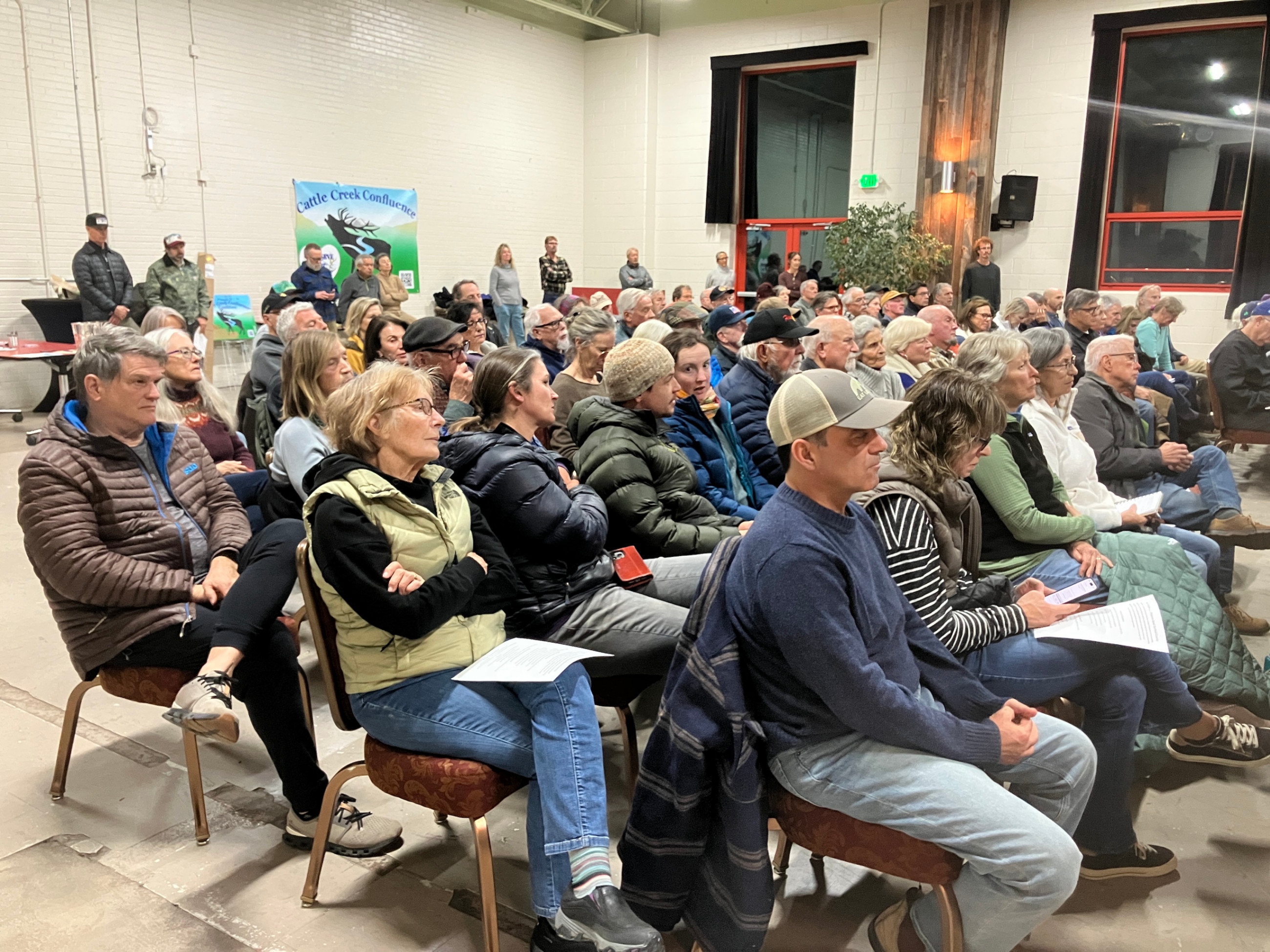
By Will Buzzerd Sopris Sun Correspondent On Jan. 6, hundreds of Roaring Fork Valley residents gathered remotely, and in person at Carbondale’s Third Street Center, to voice concerns about Harvest Roaring Fork, a proposed 1,500-unit residential community on roughly 283 acres of open space near the confluence of Cattle Creek and the Roaring Fork River. Hosted by a citizen-led opposition group called the Cattle Creek Confluence Coalition, the meeting was organized in preparation for an upcoming Garfield County Planning Commission meeting, during which the development’s fate may be decided. Formerly the Sanders Ranch, the property has faced land-use battles in the past. In 2005, a developer aimed to create an 18-hole golf course, but that met its demise after construction crews disrupted a herd of elk seeking winter habitat and a bulldozer tore down the property’s iconic big red “U76” barn, provoking public outcry. Although a slew of development projects have been proposed by different owners since, the still-undeveloped open space continues to serve as a wildlife corridor for elk, mule deer and other species. The current applicant, Harvest Roaring Fork LLC, bought the Highway 82 adjacent property in the spring of 2024. Harvest Roaring Fork is affiliated with Texas-based development firm Realty Capital, which has already developed over 500 homes and apartments across the Roaring Fork Valley, including the Tree Farm Lofts across from Willits. Harvest Roaring Fork’s big selling point is its prioritization of affordable workforce housing in the midst of a growing housing crisis. Of the 1,500 residential units proposed, 150 would be price capped and deed restricted, in accordance with the 10% minimum required by Garfield County’s Land Use and Development Code. An additional 300 units would be deed restricted and sold only to buyers with full-time employment in Garfield, Eagle or Pitkin County. These extra deed-restricted units would not be required, and thus face no official pricing restrictions. The intent is that ownership of these properties could only be transferred to other locally employed buyers. The developer expects to price these units between $475,000 and $575,000, based on construction cost estimates. For comparison, real estate platforms, such as Zillow and Redfin, estimate the median home-sale price in Garfield County at approximately $615,000. The remaining 1,050 units, marked as “market-rate workforce units,” would not be price capped or deed restricted, and are estimated to cost anywhere between $400,000 to $1.5 million. In addition, Harvest Roaring Fork intends to develop the area into a fully-fledged suburban community, including a village center with 55,000 square feet of commercial space, a 120-room hotel, playgrounds, a childcare facility and a coffee shop within a reconstructed replica of the historic U76 barn. Also present in the application are 325 accessory dwelling units, which, when factored in with the 1,500 regular units and accounting for a 54-acre conservation easement, makes for a development density of 7.96 units per acre. None of the neighborhoods in the surrounding area — including Iron Bridge, Aspen Glen, Teller Springs and Westbank Ranch — exceed a density of one unit per acre. Such unprecedented density has spurred the Cattle Creek Confluence Coalition to strongly oppose the development. Since the project’s proposal, the coalition has been gathering members and donations to defend the 283-acre parcel from what it calls irreversible change. During the Jan. 6 meeting, concerns included increased wildfire risk, light pollution, overburdening existing traffic infrastructure and emergency services, permanent disruption of a vital wildlife corridor and changing the fabric of the Valley’s rural character. The coalition’s leaders picked apart discrepancies in the developer’s traffic assessment, which accounts for fewer hotel rooms, accessory dwelling units and retail spaces than stated in the development proposal. Furthermore, the assessment does not account for construction traffic generated by the project’s estimated 17 to 20 year build out. Even with these reduced values, the traffic assessment estimated a 50% traffic increase on Highway 82. The development would also include two additional stoplights. Attendees at the meeting feared that the resulting gridlock could be disastrous in the case of a wildfire evacuation. The coalition has been collecting resources in preparation for a Planning Commission meeting, originally scheduled for Jan. 28. Due to the applicant failing a public notice requirement, the meeting has been postponed to Feb. 25 at 6pm, and will take place in the Ascent Center at Colorado Mountain College’s Spring Valley Campus.
What do you think about the proposed Harvest Roaring Fork development?
_by John Stroud Sopris Sun Contributor
… Time, flowing like a river_
Time, beckoning me
Who knows when
We shall meet again, if ever
But time keeps flowing
Like a river to the sea …
‘Til it’s gone forever …
Unless, of course, it’s properly preserved, to counter that line from the 1980 Alan Parsons Project song, “Time.”
Indeed, time does live on in a few obvious and maybe not-so-obvious places around the Roaring Fork Valley in the form of time capsules.
Often just metal boxes or tubes of various shapes and sizes, the capsules are filled with relics and memorabilia from a particular period of time. They’re then placed inside cornerstones, or under a marked floor panel of notable buildings or other structures at the time of construction — to be unearthed decades, or even a century later.
One such time capsule was opened last spring at Crystal River Elementary School in Carbondale (CRES), 29 years after it had been placed within the original north wing of the school in 1996.
It was perhaps a bit earlier than intended for the unveiling, but necessary after the flat metal box had to be removed when the remainder of the CRES building was constructed about 10 years later.
When a former parent inquired about it with then-Principal Aimee Brockman, longtime building custodian Dean Black recalled that the school’s late librarian, Bonnie Fischer, had kept it safe in a storage closet in the library.
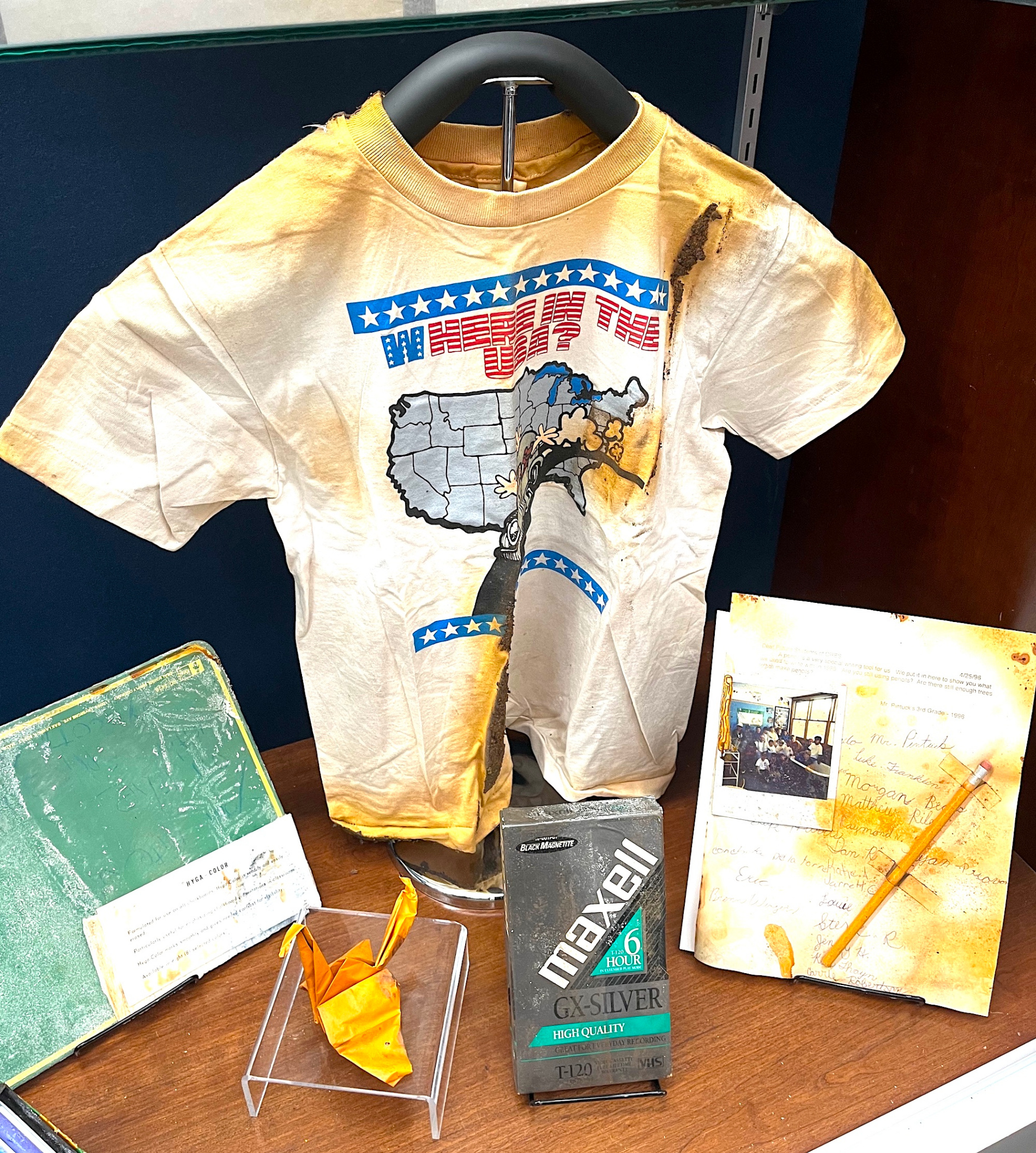
School days of the past The CRES staff decided to have an unveiling, which was probably a good thing because the loosely sealed box had been buried underground and its contents were deteriorating.
Inside, students of today were able to get a glimpse of what daily life was like at the former Carbondale Elementary School (now the Third Street Center) back in the 1980s and early ‘90s.
There were photos of children in some of the classrooms, including that of a popular late teacher, Jerry Pluger, who famously had an old bathtub in his room that served as a reading lounge.
One photo shows a student decorating the time capsule box itself in art class. There was also the American and Colorado state flags that flew outside the school, along with student essays, a 32-cent postal stamp, a Mac user’s guide and compact disc, architectural drawings of what would become CRES, and an April 25, 1996 copy of The Valley Journal, Carbondale’s hometown newspaper at the time.
“Yeah, it brought back memories of a lot of familiar faces,” said Black, who is one of the few school employees who was even around at that time. “It was just ironic that it popped up when it did.”
The contents of the time capsule remain on display in the main hallway case outside the school’s gymnasium.
Elsewhere in Carbondale, a time capsule was placed inside the north entrance cornerstone of Town Hall on Colorado Avenue when the building was dedicated on Sept. 26, 1997 — not to be disturbed until Sept. 26, 2097.
Contained within, according to newspaper accounts from that time, are a Peppino’s Pizza menu, a Mountain Fair guide, a Potato Day poster, a Carbondale newcomers’ guide, a River Valley Ranch commemorative golf ball, a telephone book, a Carbondale Police badge, town government documents, music CDs, a Colorado Rockies baseball schedule, copies of local newspapers and more.
Another time capsule resides in a support column of the Grand Avenue Bridge in Glenwood Springs, placed when it was dedicated in June 2018. And, local sculptor Vaughn Shafer referred in a recent “Everything Under the Sun” interview on KDNK to a collection of 11 mini time capsules contained within the El Jebel roundabout, where his elk sculpture serves as the centerpiece, to be opened in another 45 years.
Time-honored tradition Time capsules became popular around the turn of the 20th century, during the middle part of that century when a lot of modern buildings were being built, and again around the turn of the 21st century, said Will Grandbois, former board member of the Carbondale Historical Society.
“We’ve benefitted from some of those being opened up in more recent years, but we don’t really have a good inventory for how many more are out there,” he said.
One work in progress for the historical society was inspired when the calendar rolled past Aug. 16, 2023, or 8/16/23, which corresponds with Carbondale’s ZIP code of 81623, Grandbois explained.
The idea was to begin collecting day-to-day artifacts that would really tell the stories of the third decade of the 21st century, to be either kept as a regular display, or possibly sealed up in a locked safe to be opened on Aug. 16, 2123, by whoever the keepers of history are at that time.
“The old-school concept of a time capsule was to place it inside a building, which is cool but kind of impractical,” Grandbois said, noting that a lot of public buildings are torn down and replaced within 100 years.
A safe or traveling display that’s more mobile and can be kept wherever time might take it seemed more logical, he said.
“We’re still working to assemble a good, fairly compact representation of Carbondale in the 2020s that people can look at down the line and understand our times. It’s not only useful for the future, it’s useful for us now to put some thought into who we are, and where we’re going.”
Added Carbondale historian Sue Gray, “I love the time capsule concept, because even if they’re items commonly used today, they won’t be in the future. It’s good for people to see and try to understand that.
“And things change so quickly now,” she said. “Even in 20 years, it seems everything changes.”
Current CRES Principal Kendall Reiley said the time capsule that they opened last year sparked some interest in assembling a new one depicting school life in 2026.
She said some of the things the kids were saying when they opened the capsule were funny to hear.
For instance, there’s a classic No. 2 yellow pencil with an eraser that’s on display, along with a short student essay about this odd writing instrument.
Of course, that same type of pencil is still used today, but it did make some of the students think about what will happen in the future if all the trees that are used to make pencils get cut down, Reiley said.
“I am curious what questions our kids will want to ask kids 30 years from now,” she said. “I know it was fun for me seeing that we have a lot of the same people still around, like Mr. Dean, and other people who keep our school and our community going.”Are you, the reader, aware of any other time capsules buried in our midst? If so, please contact the Carbondale Historical Society via email: info@carbondalehistory.org, or by phone at 970-414-1078, so that they can keep a proper record of where they are and when they are to be opened.
What would you place in a time capsule to capture this day and age?

James Steindler Contributing Editor
On Friday, Dec. 12, the Garfield County Commissioners (BOCC), along with three members of the Garfield County Public Library District Board of Trustees — President Adrian Rippy-Sheehy (Silt), Vice President Michelle Foster (Parachute) and John Mallonee (at large) — interviewed a dozen candidates, four for each of the three open seats representing New Castle, Rifle and Parachute.
Each member of the six-person panel chose one question from a set list to ask each candidate. There was no opportunity for public comment.
BOCC Commissioner Mike Samson brought up the silver lining that controversy regarding access to a specific series of manga books at the libraries resulted in wider interest for serving on the library board. Not surprisingly, one of the more pertinent questions came from Chairman Tom Jankovsky: “Federal law, Colorado law and the Garfield County Library District’s bylaws require the library district to protect children from material on the internet that is harmful to their beneficial development. Do you believe there should be the same reasonable policies for children’s access to books that are designated for mature audiences?”
For the sake of space, this report focuses on the candidates’ responses to that prompt. A recording of the entire interview process, as well as cover letters and resumes, can be found at www.garfieldcountyco.gov/board-commissioners/meetings
“Part of the reason why I’ve served 10 years was because nobody else was interested in serving from Parachute in the past,” chimed in Foster, who was applauded for her decade of service. “It’s wonderful that we do have all of these applicants.”
The BOCC is expected to announce selections at its Jan. 5 meeting, just in time for the library board’s first meeting of 2026 on Jan. 8.
Rifle candidates
First up for the Rifle seat was Juby Cumming, the chief deputy assessor for Garfield County. When asked what her strengths are, she said she is “annoyingly organized” but also “easy going.”
“This is a really well-run library system,” she said, drawing a comparison to all of the libraries she’s visited, from the East to the West Coast and as far as Scotland.
She said it’s not the library’s position to monitor what a child is reading, but rather parents’, who, she suggested, can review what their children are checking out.
“I am an Evangelical Christian … and that is the most important part of my life,” said the next Rifle candidate, former Garfield County manager Ed Green, who oversaw the library system initially in that position, before it became its own district. He is an Army veteran, and considers himself a conservative.
He "definitely" agreed with controlling access to mature books in a way similar to that of the internet. “I hear the argument all the time that it’s really the parents’ responsibility to monitor that, but once they get into the library they’re ours, they’re our responsibility.”
Since 2011, Gregorio Rios has worked as a petroleum engineer technician for the Bureau of Land Management. Originally from Paraguay, he has lived in the U.S. for 20 years. He frequents the library and participates in its Latino heritage events. When he and his family travel, they tend to visit libraries.
He expressed that some library content should be accessible by a certain age, but that developing brains need more guidance. Jankovsky pushed him for clarity, repeating his question. Rios responded simply, “I think so.”
Alex Vessell has been a public school teacher and resident in Rifle for four years. “I live right near the library in Rifle, and I love going there,” he said. “I think it’s a great place for the community. I think it’s a great place for knowledge.”
Vessel opined, “There maybe could be cases that we would be like, ‘Hey, this information would not be good to give out to kids’ … I think there’s some judgement there that could be made, but overall I’m not in favor of huge bans or anything.”
Parachute/Battlement Mesa
A career educator and the former superintendent of Aspen School District, David Baugh moved to Colorado in 2020, but just recently settled in Battlement Mesa.
“I thought this would be a terrific way to continue community service,” he said. “I bring to the table the ability to listen and try to understand different points of view.”
When it comes to regulating children’s access to print materials, he said that the law, particularly Colorado law, is clear. Although, he added, “I think we can provide sections, and I think we can do that within the scope of the law.”
Cynthia “Cindy” Bjerstedt has lived in Battlement Mesa for over 10 years, having moved from Ohio for a position at Grand River Health. She also fostered children over the years. “Children are very important to me, and protecting them is very important,” she said.
“There’s been a lot of … wordsmithing around the ‘banning of books’ and so forth,” she stated, and was the first to delve into the specifics of the books in question. “We’re not talking about ‘Harry Potter’ books here … We’re talking about books that I’ve seen that are very sexually exploitative of children.”
A resume was not included with Judy Herigstad’s cover letter, but she explained that she’s worked a lot of jobs “out of necessity,” including for the U.S. Army and in armed security and information technology. “I love the library,” she said, adding that she’s “had the joy of watching [the Parachute] library go from some teeny-little shoebox to this fantastic building that people love to go to.”
She’s of the opinion that the library should "absolutely, without a doubt" protect children from printed materials. “I’ve seen some of these materials and I wish I never had,” she said. “I’d never wish that on somebody’s innocent child.”
Lynda Prendergast, a retired educator, has served on several boards and committees, including as president of the local Kiwanis Club. “I’ve taught kids and worked with parents in all kinds of different settings,” said Prendergast.
“I think that our library is already doing as much as they can do as far as where books are placed,” she commented. When it comes to changing policy, she said it would have to be discussed and voted on by the trustees.
New Castle
After graduating from Basalt High School, Kristi Gill moved to New Castle to raise a family. She was a nurse at Valley View Hospital for 35 years and 10 years at Grand River Health.
She said that she likes to do research rather than form an immediate opinion, so she went to the Silt Library and looked up the manga books under scrutiny. If the books are going to be on the shelves “they have to be put where children can’t get them,” she said. Otherwise, she worried that libraries risk parents not allowing their children to go there anymore.
Nicole Gordon has been in New Castle for over two years — Colorado for 25 — and has a masters degree in journalism. She works remotely as a writer, editor and communications professional. “Libraries are near and dear to my heart,” Gordon said, describing herself as an “enthusiastic patron" of the New Castle Library.
“While I absolutely sympathize with the desire to protect children, I think adult books should be shelved in the adult section and that parents, not government officials, should decide what kids look at.” Putting that in the hands of the government, she said, would be a “slippery slope to censorship.” She, and others, said that what children can access on the internet is more concerning than what they might find at the library.
John Gracey grew up on a dairy farm in Ireland. He has degrees in agriculture and food technology and raised four children. He settled into a career in sales before meeting his wife and moving to the U.S. Aside from sales, he’s worked in homecare as well.
He and his wife are both musicians and perform a few times a year between the six library branches. “The library is the epitome of civilization,” he said, “and we have six wonderful Garfield County libraries.” He commended staff and Executive Director Jamie LaRue.
Green supported restricting child access to books he described as “pornographic,” by placing them out of reach or in a different room.
Brit McClin was the only incumbent to be interviewed, having served for the past year after being appointed by the BOCC to fulfill Crystal Mariscal’s term. “Probably the greatest strength that I have is that I know the job,” he said.
He explained that the library he went to growing up had an age-restricted section. “I survived that,” he said. “So, personally, I really don’t care if we do that again.” However, he restated the importance of following the law, and referenced Colorado Senate Bill 24-216 Section 2 standards, which restrict libraries from regulating access to materials based on partisan or doctrinal disapproval and places an onus on libraries to challenge censorship.
“Does the public have a right to take umbrage with some of these positions? Absolutely,” he said.
Library recommendations The library board met on Monday, Dec. 15 to vote on its recommended candidates. All library board members were present, except Tony Hershey (Glenwood Springs). McClin recused himself for the New Castle discussion.
The board unanimously voted to recommend Gregorio Rios (Rifle), Lynda Prendergast (Parachute) and Brit McLin (New Castle).
What do you think of the library board appointment process and what qualities or values do you seek in library board trustees?

James Steindler Contributing Editor
The Roaring Fork Ski Fair Coop surfaced over the summer by way of an online petition advocating for lower pricing of Aspen Skiing Company (Ski Co) season passes for the local workforce.
It all started with Anna Rosenberg. Before coming West, she grew up on an organic farm in Cincinnati, Ohio, where her parents did what they loved at the expense of having higher-paying jobs. Rosenberg watched other kids at Walnut Hills High School, whose parents could afford it, regularly bus to the nearest downhill mountain about 45 minutes away. Rosenberg eventually followed her mother to Colorado and learned how to snowboard at Sunlight Mountain Resort.
Fast forward to this summer. When Ski Co’s super-early Chamber Pass pricing came online, Rosenberg was displeased to discover that it had not only gone up by $100, which she expected, but by $125 compared to the super-early deal for the 2024-2025 season of $1,899. This was the impetus for the petition.
“I’m the kind of girl who will get in a fight over $25,” Rosenberg told The Sopris Sun. Recognizing that she was not alone in her frustration with the wider issue of affordability, she created the petition.
Rosenberg has some history with the company and said she is an “inactive” employee of Ski Co’s catering department — she hasn’t picked up a shift in over a year. She took on this effort outside of her role there, but said she wants to work with the company to accomplish the Coop’s goals.
“We want to absolutely be working in unison with [Ski Co],” she said. “We exist in a mutually beneficial relationship: The Roaring Fork Valley does not thrive without Ski Co because of the tourism it brings in, and Ski Co does not thrive without the Roaring Fork Valley because we have created this really awesome place that tourists love to come see.”
The petition includes four asks: “1) Introduc[ing] a new community-tiered premier pass for full-time Roaring Fork Valley locals who are not affiliated with a chamber-member business … 2) Implement[ing] long-term safeguards on chamber premier pass pricing — including: A) capping annual price increases at no more than 3%, aligning with typical inflation; B) rolling back the Chamber Pass price to $1,745 by the 2026–2027 season (the inflation-adjusted rate based on the 2016–17 price of $1,299); C) preventing further hikes that outpace the local cost of living. 3) Increase transparency around how pass pricing is determined and the rationale behind annual increases for locals. 4) Uphold the commitment to local access by acknowledging that affordability is essential to maintaining the soul and inclusivity of our ski community.”
As of Wednesday, 1,420 verified signatures were recorded.
When asked where the 3% average-inflation figure came from, Rosenberg said it was the cumulative average of the past decade and likely gleaned from an online search. According to the U.S. Bureau of Labor Statistics, the consumer price index (CPI) for “all items” rose 3% in 12 months as of September, but peaked at 9.1% in June of 2022. The last time the CPI leveled out at 0% was in 2015. The 10-year average is around 3%.
In a statement from Aspen One, Ski Co’s umbrella company, Sara Roston, the vice president of corporate and brand communications, said that the company met with Rosenberg twice “in good faith to understand her concerns.”
“Our business is one that is increasingly complex and costly,” Roston said. “Everything we do on and off-mountain — from snowmaking to lift infrastructure and maintenance, from upgrading our food and beverage outlets to mountain safety and operations, from increasing employee benefits to building employee housing — relies on revenue generated in large part by pass and lift ticket sales.”
Ski Co “offer[s] 10 pass products available at a variety of price points ,” Roston added, “with many discounted pass options for groups that include seniors, students, teachers, members of the military, Aspen Valley Ski & Snowboard Club and more.”
One hurdle for the Coop’s proposed non-chamber locals discount for season passes is a Forest Service (USFS) regulation that bars "discriminatory pricing … based on race, color, religion, sex, national origin, age, disability or place of residence.”
“Guidance from the USFS is we cannot discount season-long access by location/zip code of the purchaser,” said Roston, which partly explained why its seven-day Valley Pass is permissible — an offering that’s also extended to the general public for in-person purchasing one week every October.
“The Chamber Pass is offered to a group (members of the chamber of commerce), not individual consumers, which allows us to provide the access we do through that product,” Roston explained, “which is also extended to member spouses/partners.”
Regarding transparency, Rosenberg said that if Ski Co doesn’t disclose specifics in how it calculates annual increases, the Coop would like to bring its own research, but needs help collecting reliable data. Therefore, the Coop is seeking specialized assistance in that analysis.
It is also in search of a fiscal sponsorship and is hoping for support from an attorney to thoughtfully navigate legal parameters, such as the USFS regulation.
“Ski Co does a lot of great things for their community. They are probably the leader in ski resorts in what they do for their community,” said Rosenberg. “We see that they are contributing a lot. We are asking for them to look at the Average Joe, and we want them to contribute more.”
Playing off of the “Fair” in the Coop’s name, Rosenberg is encouraging supporters to wear fairy wings or tutus to display their support, particularly while on one of the four mountains.
Regular-season pricing went into effect on Dec. 6. As of now, a full-season Chamber Pass costs $2,704 and a nondiscounted adult Premier Pass is $3,834.
For more from the Roaring Fork Ski Fair Coop, visit its petition page at www.tinyurl.com/RFSkiFairCoop
To get in touch, email rfskifaircoop@gmail.com
What are your thoughts on the Roaring Fork Ski Fair Coop efforts?